There is one factor that I use in many of my life decisions because years ago, and for a long time, I tried to suffer as little as possible while learning. At the end of the day, with very little left in my mind, I still managed to get some things done. That was enough to keep going.
My curiosity doesn’t arise from nothing, because I know people who find pleasure in learning alone. I would love to be more like them. For me, it only emerges from what I’ll do with what I learn. So it’s worth asking: why learn, if it hurts that much?
For example: In relationships, when things are just okay, people often stay together for months or years, slowly tolerating discomfort, hoping things will improve, or simply avoiding the pain of making a decision. But when a relationship becomes truly terrible, when the pain is undeniable and impossible to ignore, it often ends much faster, sometimes within weeks.
This is the Beta-Region Paradox. If you need to go somewhere nearby, you can just walk. But if the place is far, you’ll probably use a bike. Strangely, this means that at a certain point, you arrive faster by choosing the harder option than by choosing the easier one. As if when the destination is farther away, you reach it sooner because you chose difficulty, while when it’s close, you move slower because you chose comfort.
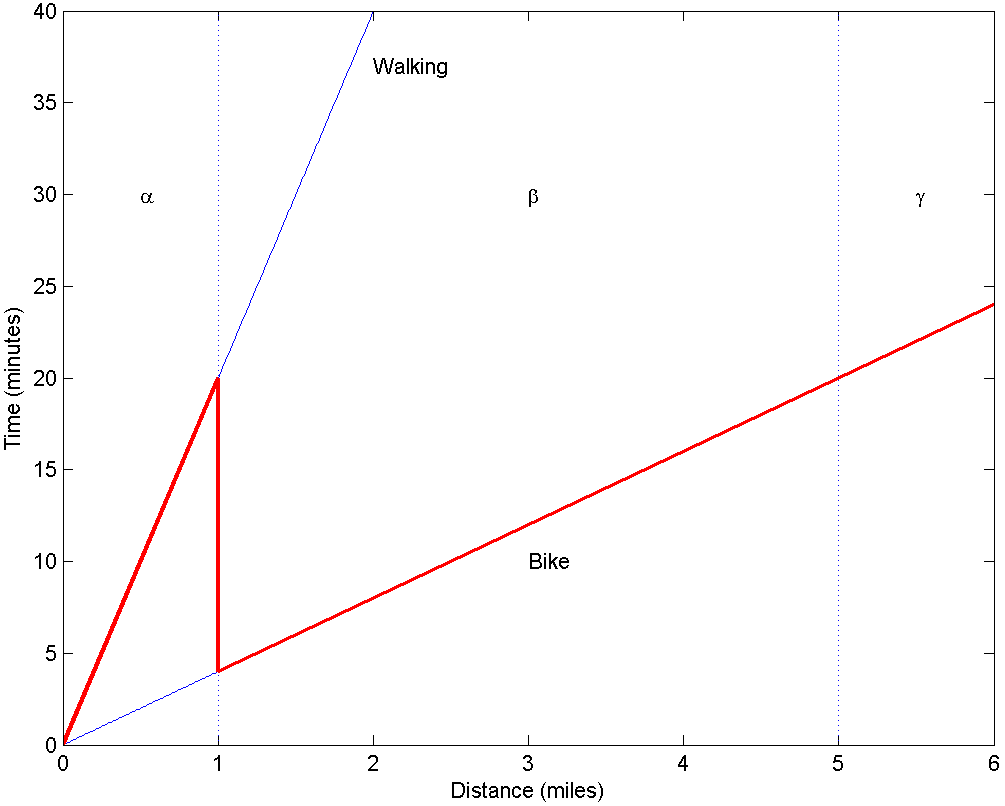
This also helps explain why migration often works so well for the migrant: Starting over from scratch, something deeply human and repeated for hundreds and thousands of years, forces action.
You see it in groups as well: a country in collapse, a persecuted community, a population under attack. When they move, they often rebuild faster and more decisively elsewhere. Not because it’s easier.
Extreme situations don’t give you time to negotiate with yourself. You either move or you break. Moderate discomfort leaves room to delay.
I apply this concept to how I live. I make my life harder on purpose.
When choosing between an easy, familiar path and a challenging, unfamiliar one, I usually choose the challenge. This shows up in two areas of my life.
- Buying: Which laptop to choose? Buying a more expensive laptop requires more financial effort, but it gives me greater potential to do great work and deliver better results. I choose the harder option, and I end up with better tools.
- Creating: When choosing between staying with a familiar programming language or learning a new one, learning the new one takes more effort but sticking with the familiar means missing out on everything I could achieve, I choose the harder path. I learn something new to build better things.
It’s in the projects I work on, it’s in the things I set out to do. A person can’t choose their luck, but sometimes luck can be hidden behind these small choices.
The immediate result is that my life feels harder than it needs to be. But the difficulty serves a purpose. By choosing intense challenges rather than moderate comfort, I trigger the same psychological mechanisms that the region-beta paradox describes.
Hard challenges force adaptation, while comfort creates the illusion of safety without real progress.
Making my life hard on purpose is a conscious strategy that I do by understanding how humans adapt to difficulty. The region-beta paradox shows that our intuitions about challenge and recovery are often wrong. We think avoiding intense difficulty will make life easier, but the opposite may be true. I would rather face hard challenges now while building skills and triggering real adaptation than coast in moderate discomfort that never resolves.
Stars. Leaving something behind is also difficult, but that’s what Cooper did in Interstellar, wasn’t it?📷
I’ve been doing this for years, and I think there have been times when I couldn’t hold the difficulty, and choosing hard didn’t get me anything at all.. At least it’s over. Learned something, without wanting to.
Some of the small things I’m grateful for now are the result of many months of hard work but they’re just side effects. They’re still small things, and I’ll probably forget about them in a few months. I don’t think gratitude should be tied to outcomes, for obvious reasons: no one can do everything. Even having the will to do something is already rare. That’s why it feels tragic when someone wants to act, but can’t or tries and fails.
My decision will always be to take on the most challenging path only if it has the potential to be something great, while remaining grateful for what I have. It’s like they say: Shoot for the moon. Even if you miss, you’ll land among the stars.